Originally posted in German on 29th June 2026
In Raja yoga satya refers to the truthfulness of thinking, feeling and action. It not only includes refraining from lying to others, but above all overcoming self-deception. The article shows how truth, logic and spiritual development are connected with each other and why satya can be understood as an active path of development.
by Heinz Grill
Satya – truthfulness as a basis of Raja Yoga
In Raja Yoga,1)Cf. Rāja yoga according to Patañjali, Yoga Sutra II, 30. The yamas constitute the first limb of the eight limbed path of yoga (aṣṭāṅga-yoga): The Sanskrit text reads: ahiṃsā-satya-asteya-brahmacarya-aparigrahāḥ yamāḥ the royal meditation path, five principle rules known as the yamas are named, these constitute a kind of basic human foundation for meditation. Yama means control or guidance of the consciousness. These five yamas rules are: ahimsa = non-violence, satya = truthfulness2)The Sanskrit word satya means truth or truthfulness; it stems from sat (“being”, “reality”)., asteya = non-stealing, brahmacharya = not desiring and aparigraha = non-avarice.
The second rule – concerning human truth or truthfulness – relates to people’s thoughts and actions and rules out any form of deception towards other people, as well as, the all-too-common self-deception. If logically thought through, there is no greater illogicality that a person can impose upon themselves than to deceive or lie to themselves and to live in an illusory reality. Yet, this illogicality occupies a disproportionately large and very comfortable place in life. Logic and truth want to be achieved by human beings through active, even confrontational engagement so that comfortable illogicality with all its deceptions and delusions fades from the soul.
Raja Yoga wants to reveal the situation of human beings and their truthfulness in relation to an ordered spiritual aspiration in systematic, step-by-step progression. The many manipulations that take place in the world in political or economic actions, are not of great interest to yoga. The more aspiring individuals advance through self-realisation and a life of truthfulness, the more clearly they highlight the disharmonies of the worldly bustle, because they represent a lasting value through a life of truthfulness with respect to themselves and others.
The path to truth requires courage and inner effort
However, bringing satya to life and seeing it from a perspective grounded in reality presents quite a challenge for the aspiring yoga student because it is not just linked to the observance of a few small human precepts, but rather it presupposes a monumental, creative act of courageous consciousness that wants to ascend to indescribable heights. Truth (satya) is like a mountain, a Himalayan giant that students want to climb and with this they must reckon for harsh weather conditions and terrifying obstacles.
Why does anyone climb a mountain at all when the valley floors with their fresh rivers and comfortable conditions offer human beings so many advantages? The French mountaineer Lionel Terray spoke of, “Les Conquérants de l’inutile”, the conquering of the useless and from the viewpoint of any unreflective citizen, every mountaineer could be seen as pretty mad. From a worldly point of view it seems logical to enjoy the earth and take the best it has to offer. Conversely, it would seem illogical for someone to take upon themselves the arduous task of exploring life’s great mysteries and discovering the answer to the question of life within them. Spiritual people, especially all those who put more eagerness into the day than most, often appear actually abnormal, mad or as if not completely having arrived in the world with their logic.3)The Greek philosopher Plato described in his famous Allegory of the Cave (Politeia, Book VII) how people mistake shadows on a cave wall for reality. Only the arduous ascent out of the cave leads, metaphorically, to insights into reality in the clear light of the sun. Plato further describes how, upon returning, this person encounters a lack of understanding among the other cave dwellers. Those who continue to know only the shadows consider him confused and dangerous. They even threaten him with death, as their own self-deception is threatened by him. The allegory powerfully illustrates the clash between the different worlds of sat and asat. While Plato describes the path philosophically as an allegory, Raja Yoga views it as a conscious path of development of thinking, feeling and action.

Self-deception as an expression of illogicality
Self-deception happens almost automatically, like a powerful, compelling logic, like an ever lurking, cavernous grasp of the world, disconnected from any imaginative insight. Self-deception can offer a sense of well-being, masking the pain of ignorance and the overwhelming stream of desire. Human beings need a logic, which they defend with sword and canon, so that at all costs they do not have to enter the reality of satya.
Consider, for instance, the natural drive that stirs along with the release of saliva into the mouth, when the feeling of hunger arises and the body signals its elemental need for food. It is certainly logical that the need for food is responded to and the pallet is gratified. Yet what symptoms or signs appear if spiritual development in the creative action of the Self and the ascent towards a higher meaning stay neglected? Does a form of hunger arise then, too? Human nature initially feels no pain, when the possible and yet not sufficiently thought ideal glides away like a distant star in the heavens amidst the stream of daily activity. The days go by, years accumulate, hair shows signs of grey and the Spirit, that stands unnoticed before the door of life, seeking to announce its sunlike reality, remains unheard and unnoticed. Human self-deception is a real, immanent part of the human being, in other words one that is deeply engraved in human nature. A person can rely on their natural sensations to recognise when they are hungry or thirsty, and can satisfy these needs in good time. Spiritual need, however, is as if outside the body’s own cell system and does not create a physical response but breathes only within world creation and in the utterly still sheath of self-reality. Satya, the development towards ideals and higher forms of consciousness accompanied by a morally sound character, therefore dwells in the Spirit within world creation and only rarely reaches human consciousness.
The lack of truth often goes unnoticed
In the same sense, human nature often fails to notice, for example, a lack of movement. Only after some time of activating certain movements can the lack, that is experienced in one’s phlegmatic everyday life, be noticed. A person may lack satya and live in a self-deception believing instead that they suffer from totally different deficits, such as a lack of affection or shortage of money. The reality of satya is subject to deception caused by illogicality and the dominance of physical circumstances.
Satya in everyday life – truth reveals itself through actions
The opposite of satya is asatya, falsehood. This manifests particularly in the self-deception of feelings and the many emotional illusions that people often construct through religious escapism or by seeking a sense of security in materialistic possessions. It is a lie to oneself, for example, to know one ought to take certain developmental steps, commit to more significant duties, and accept responsibility for what has been learnt and what still has to be learnt, and yet, out of comfort or fear, evade these life giving steps of the will.
Often people state that they wanted to take certain steps and aim for certain perspectives in life but have failed. They claim outer circumstances were too difficult and the obstacles were too great resulting in the failure. From a spiritual perspective, however, these statements do not correspond to the truth; rather, these people have held back reserves and focused their attention on other aims, meaning the intended aims could not be achieved. In the soul it is indeed true that human beings always reach the aims that they strive for in the innermost depths of their soul. People live for this inner need and aim, and no power on earth will be able to drive them away from this will.
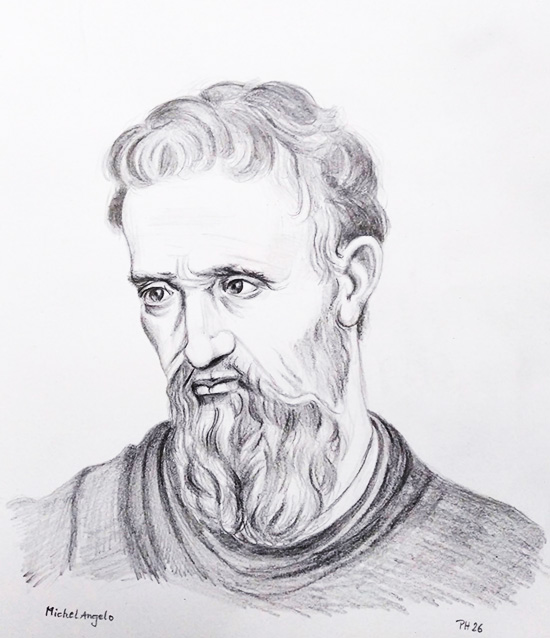
A life’s work and a person’s personal development belong together. From a soul-spiritual perspective it is impossible to leave behind a worthy life’s work while simultaneously being a person of questionable morality.
Drawing: Petra Himmel
A life’s work as a measure of truthfulness
Two major aspects of satya, truth can be observed outwardly and described in relatively practical terms. The life’s work a person builds becomes a historical fact. It is an achievement that enters into the fabric of world creation and, as such, constitutes a truth. The second reality, that is also anchored in the depths of the human will, lies in the way people are connected with their life’s work and with all the tasks that they have managed to accomplish. Have they written a book and brought their work into being through a creative activity, or were they only able to accomplish it primarily using artificial intelligence?
In practical terms, therefore, the life’s work can serve as a yardstick for the aspect of satya – truthfulness. The soul wants to be a part, with an authentic connection to the person’s life’s work and therefore, this connection forms a practical basis for satya. Those who meditate can therefore evaluate the fruits of that meditation in terms of spiritual experience and insight while simultaneously observing the further contributions they develop towards others and to creation as a whole. This form of self-observation is logical, as it fosters development and strengthens individuals in their heart.
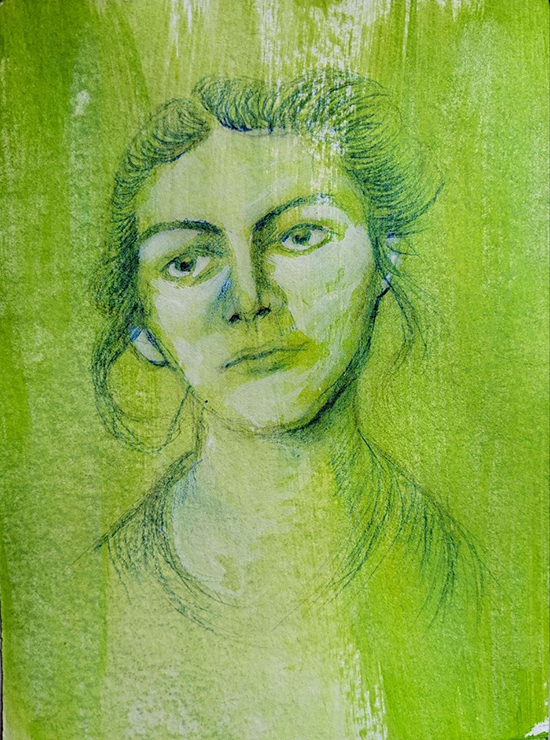
In the parts in which the physiognomy is really expressed the human being is actually authentic and true.
Drawing: Yva Ev
The Gospels on truth and self-deception
In this context, a Gospel passage concerning self-deception, and how quickly it manifests in religions, takes on significant meaning:
“Not everyone who says to Me, ‘Lord, Lord,’ shall enter the kingdom of heaven, but he who does the will of My Father in heaven. [Note: he who observes spiritual law] Many will say to Me in that day, ‘Lord, Lord, have we not prophesied in Your name, cast out demons in Your name, and done many wonders in Your name?’ And then I will declare to them, ‘I never knew you; depart from Me, you who practice lawlessness!’ (Matthew 7:21-23)4)Passage taken from the New King James Version. Copyright © 1982 by Thomas Nelson. Matthew 7:21-23
The article highlights the following questions:
What does Satya mean?
Satya means truthfulness or truth and is one of the five Yamas of Raja Yoga.
What distinguishes truth from honesty?
Honesty primarily concerns one’s behaviour toward others. Satya, however, also encompasses truthfulness toward oneself.
Why is self-deception an obstacle?
Those who deceive themselves fail to clearly recognise their own potential for growth and lose touch with reality, as well as, their own ideals.
Why is Satya compared to climbing a mountain?
Truth requires courage, perseverance, and conscious effort. Like a mountain climb, it leads, step by step, to a broader perspective.
What role does meditation play?
Meditation supports the development of truthfulness when combined with practical action and an objective view of reality.
Anmerkungen
| ⇑1 | Cf. Rāja yoga according to Patañjali, Yoga Sutra II, 30. The yamas constitute the first limb of the eight limbed path of yoga (aṣṭāṅga-yoga): The Sanskrit text reads: ahiṃsā-satya-asteya-brahmacarya-aparigrahāḥ yamāḥ |
|---|---|
| ⇑2 | The Sanskrit word satya means truth or truthfulness; it stems from sat (“being”, “reality”). |
| ⇑3 | The Greek philosopher Plato described in his famous Allegory of the Cave (Politeia, Book VII) how people mistake shadows on a cave wall for reality. Only the arduous ascent out of the cave leads, metaphorically, to insights into reality in the clear light of the sun. Plato further describes how, upon returning, this person encounters a lack of understanding among the other cave dwellers. Those who continue to know only the shadows consider him confused and dangerous. They even threaten him with death, as their own self-deception is threatened by him. The allegory powerfully illustrates the clash between the different worlds of sat and asat. While Plato describes the path philosophically as an allegory, Raja Yoga views it as a conscious path of development of thinking, feeling and action. |
| ⇑4 | Passage taken from the New King James Version. Copyright © 1982 by Thomas Nelson. Matthew 7:21-23 |