Can chakras be opened through specific yoga exercises or breathing techniques?
While classical Kundalini yoga focuses on the awakening of a hidden ‘serpent-force’, Heinz Grill describes a different path of spiritual development. According to this perspective, chakras are not energy centres that are already fully formed and can be simply activated through specific techniques. They emerge, rather, through the conscious development of soul qualities, spiritual insight, and moral maturity. Yoga asanas can support this developmental process through conscious concentration and formation.1)The introductory summary at the beginning has been added editorially for the online edition. The main text comes from Heinz Grill.
Originally posted in German on 13th October 2026
What is Kundalini Shakti – the serpent force?
In Eastern yogic teachings, the term Kundalini refers to the great divine force of the universe, which rests within the human being in a latent state at the very bottom of the spine. It actually rests, coiled, sleeping, covered in darkness, as a force not yet ignited and inaccessible to the consciousness. The word kundala means coiled.2)The Sanskrit term kuṇḍalinī means the ‘coiled one’ and is connected with the sleeping serpent force in kuṇḍalinī yoga. Śakti means force or energy, and in Indian philosophy also refers to the creative divine force. The kuṇḍalinī is traditionally located in the area of the mūlādhāra cakra, the root chakra.
In general, yoga speaks of Kundalini Shakti, of the coiled serpent force, which resides at the bottom end of the spine in what is known as the muladhara cakra. The descriptions found in Indian yogic teachings regarding this mysterious force are not merely symbols or abstractions, rather, they refer to real, potential experiences inherent in the depths of the will or, otherwise expressed, in the most hidden layers of the astral body3)In anthroposophically oriented spiritual science, the soul limb of human beings is referred to as the astral body and it is the place in which soul-feelings, desires and processes of consciousness take effect. The term does not directly correspond to the sheaths of the human being in the classical Indian yoga philosophy. and they await their unfolding as a result of spiritual development of the human potential.
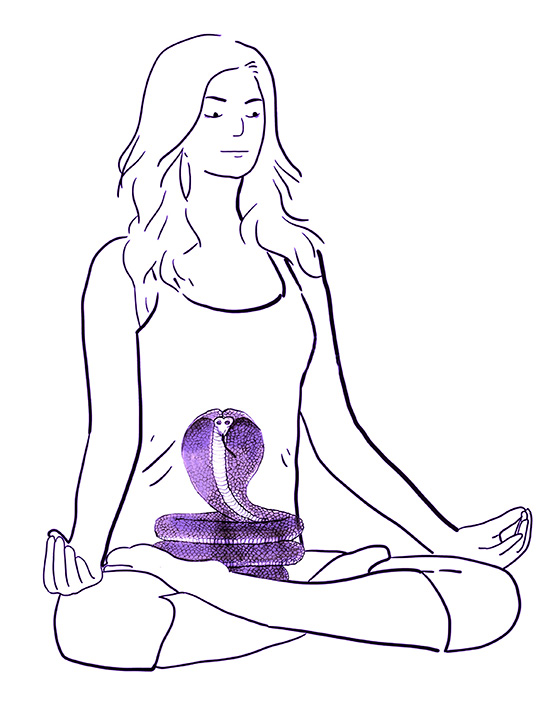
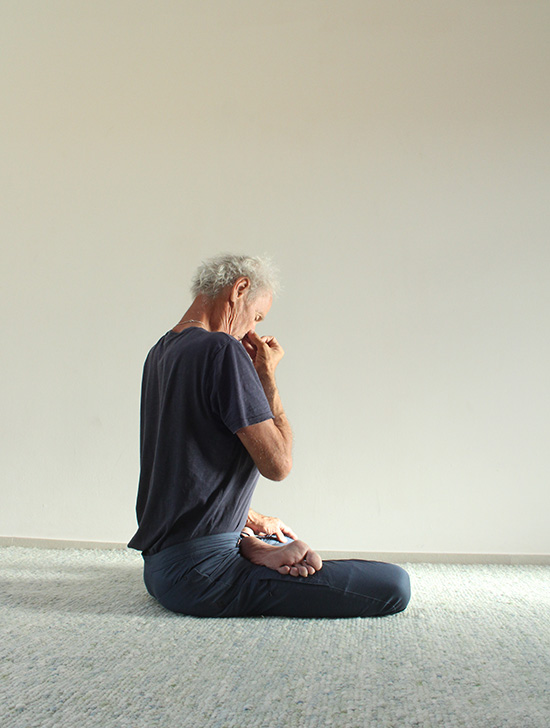
The classic awakening of the Kundalini through pranayama and bandha
The various well-known pranayama exercises4)Prāṇāyāma refers to the conscious guidance and regulation of life energy (prāṇa), in particular through breathing exercises. Bandhas are physical locks or places of guided tension that are brought into connection with the steering of the life energy in classical haṭha and kuṇḍalinī yoga. The most well-known are mūlādhāra-bandha, uḍḍīyāna-bandha and jālandhara-bandha. They are described, for example, by Swami Shivananda in ‘The Science of Pranayama’., that with the help of the breath and specific techniques, such as prolonged breath retention with centring physical gestures known as bandha, should create a conditioning that leads to the gradual awakening of the hidden kundalini forces. On the other hand, the individual asana in the yogic teachings do not necessarily serve as very effective means for awakening these dormant energies. In general, most experienced yoga practitioners view asana as stabilising for health and the physicality in general. The primary awakening of these great energies is achieved through targeted pranayama exercises, with the properly applied bandha techniques.
Why chakras cannot simply be ‘opened’
The unfolding of the various energy centres, the chakras, happens through the development of the best virtuous qualities, through morality and the unfolding of the consciousness for higher wisdoms and insights. It must be strongly emphasised that chakras, these energy centres within the astral body, cannot be ‘opened’ if they do not yet exist and have not yet been developed. A car door cannot be opened when there is no car.
Over the past few decades significant misconceptions have spread regarding these energy centres, owing to the belief that the chakras can be opened or closed, similar to the windows and doors of a car. However, for as long as the soul qualities corresponding to these chakras, these subtle, astral centres remain undeveloped, the human soul (or more generally expressed human character) forms a ‘non-being’, a reality that has yet to be born. If people have not unfolded their soul qualities, the chakras are not merely dormant, they are, in fact, non-existent. In the various regions where the chakras are located, for example, in the forehead – the sixth centre, the throat – the fifth centre, or the heart – the fourth central energy centre, the astral body is instead occupied by physical emanations. The light of the Spirit, which seeks to enliven and illuminate the soul, is lacking. A chakra only truly awakens into existence when, through spiritual development, it is brought into being as a real light-form.5)Various kuṇḍalinī yoga traditions are based on the premise that pre-existing subtle energy centres can be activated or opened. The view presented here differs from this: the chakras are not understood as simple energy centres that need to be activated, but rather as spiritual-soul realities that will only come to unfold through the conscious development of the corresponding qualities.
The significance of the yoga asanas for the development of the chakras
In the asana, the experiences that correspond to a chakra can be brought into the first processes of perception. Light soul-feelings can be integrated into the exercises in a very pleasant way through articulation, phases of concentration and consciously chosen content. The spirit can enliven the soul, and the soul can, in turn, supply the body with light.
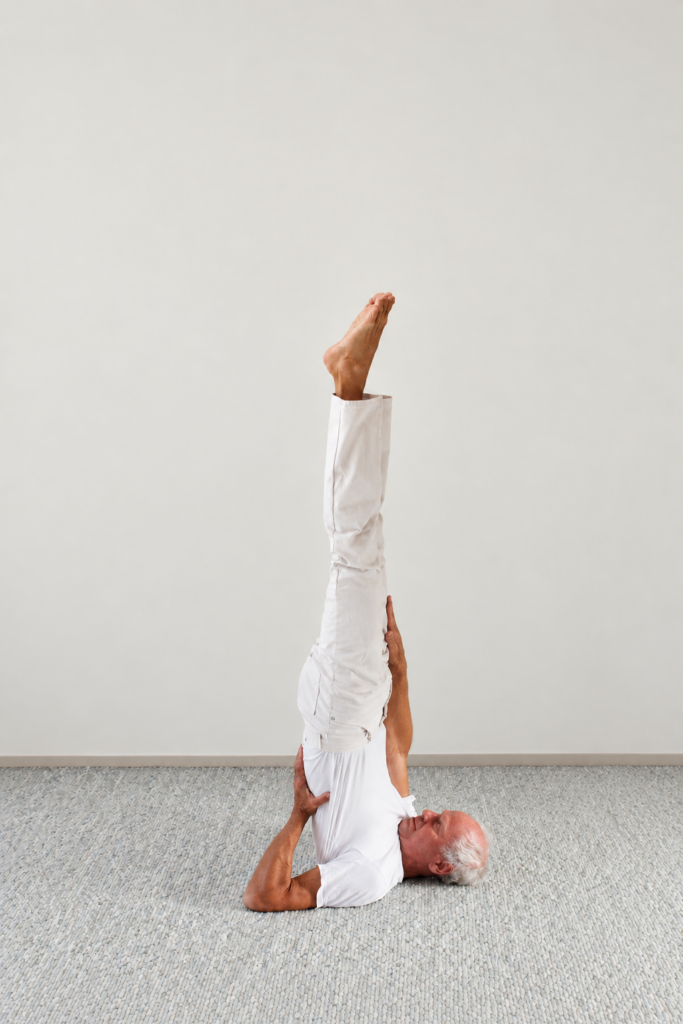
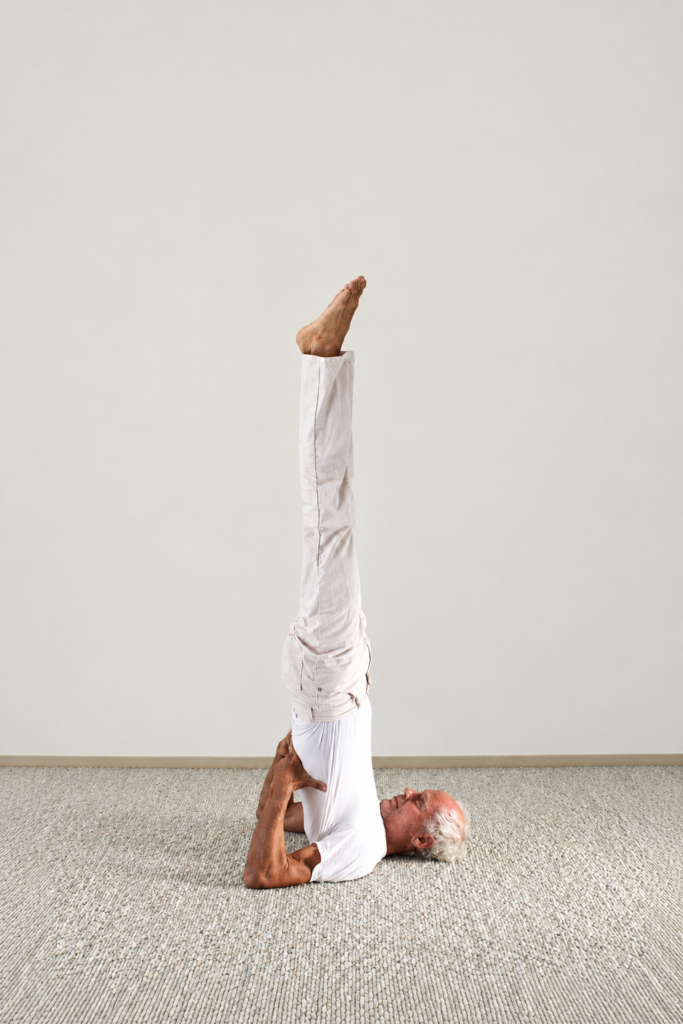
For example, sarvangasana6)Sarvāṅgāsana means the posture of all body parts (sarva = all, aṅga = limbs or body parts). The supported form is called sālamba sarvāṅgāsana. The position is also known as the ‘candle’ in English. In the practice method described here, particular emphasis is given to the dynamic movement out of the centre of the thoracic spine and its relationship to the experience of the heart., the shoulderstand, can show this development process of how spiritual forces step by step can be brought into an organising structure and gain mastery over the soul and the body. The movement has a very clear centre in the middle of the thoracic spine and it also has a flowing effect out from this middle, streaming into the periphery. Movements of energy that both gather and stream out come together harmoniously in sarvangasana, and impregnate a calm, profound experience in the heart.
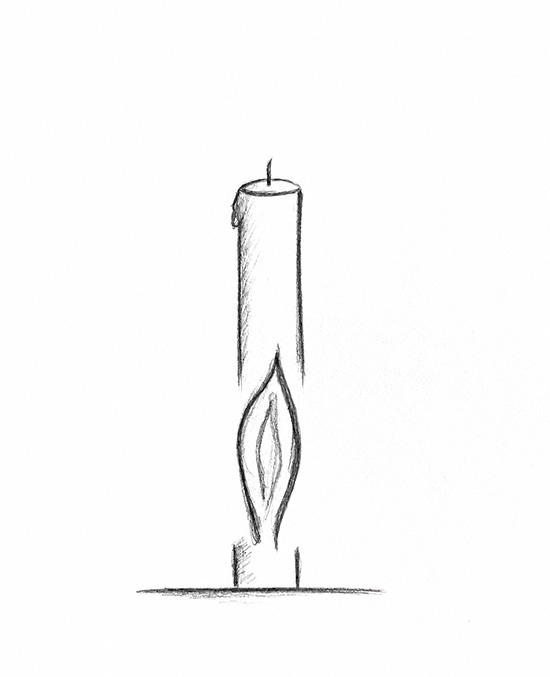
The shoulderstand – conscious development of the heart chakra.
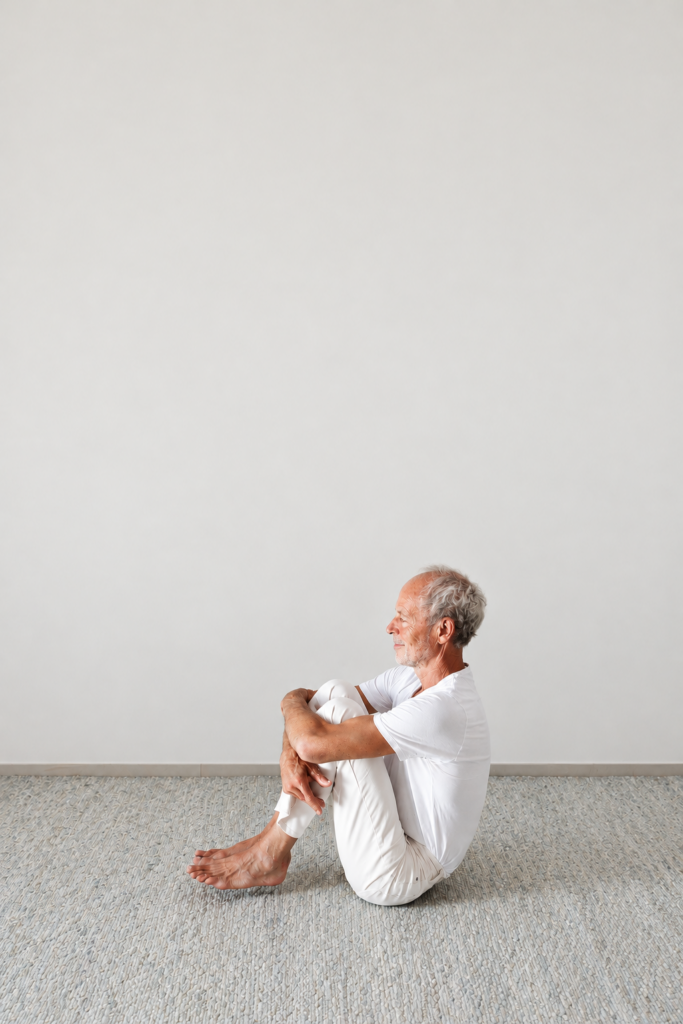
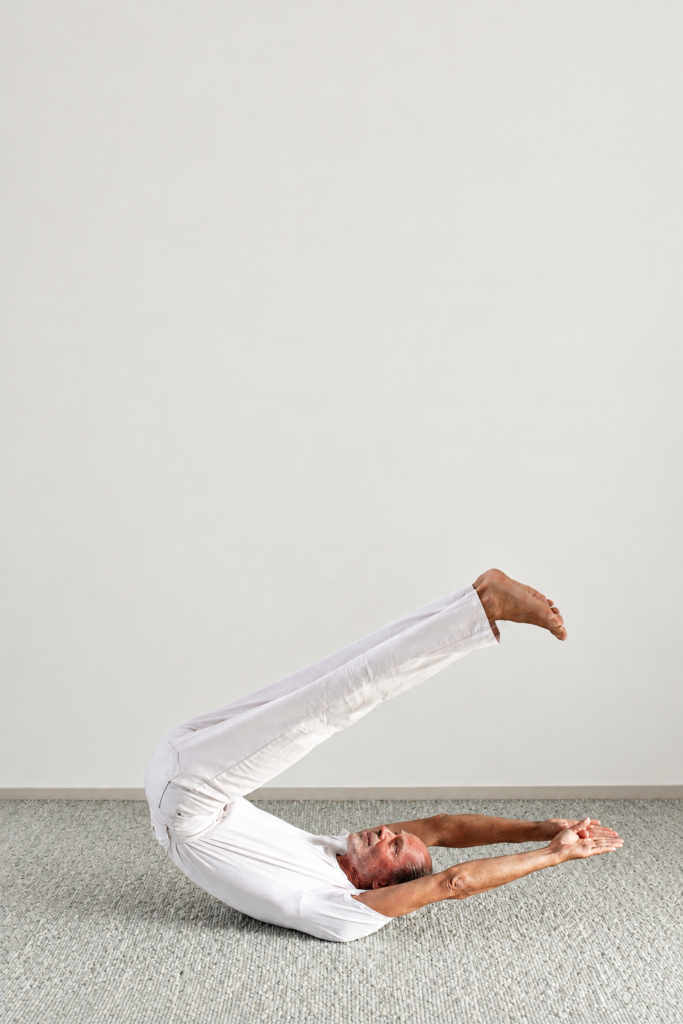


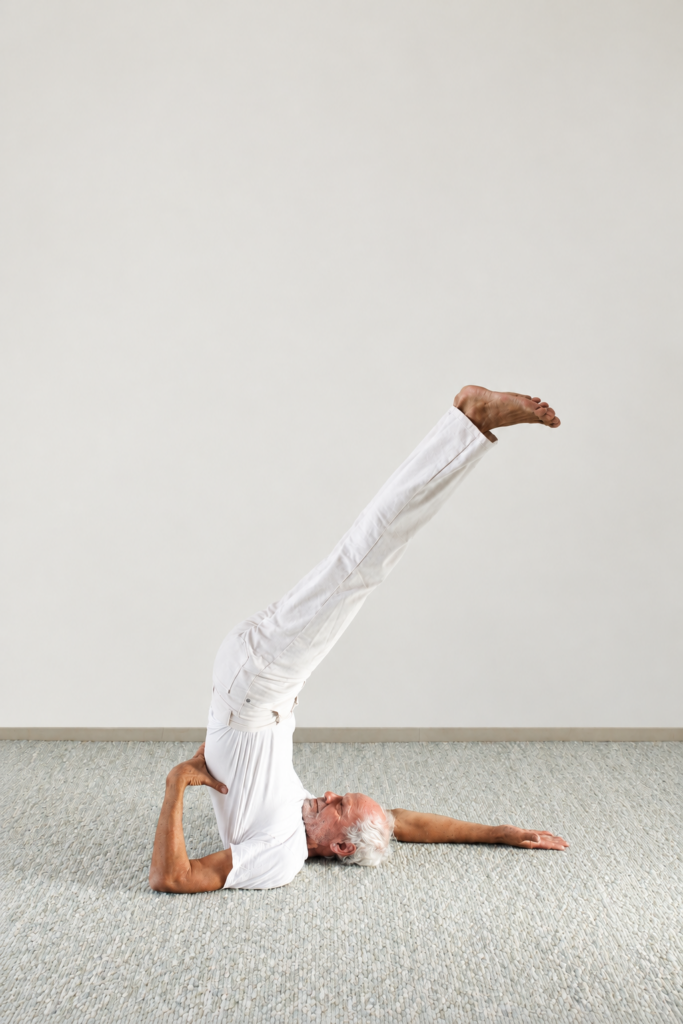
salambha sarvangasana.
Anmerkungen
| ⇑1 | The introductory summary at the beginning has been added editorially for the online edition. The main text comes from Heinz Grill. |
|---|---|
| ⇑2 | The Sanskrit term kuṇḍalinī means the ‘coiled one’ and is connected with the sleeping serpent force in kuṇḍalinī yoga. Śakti means force or energy, and in Indian philosophy also refers to the creative divine force. The kuṇḍalinī is traditionally located in the area of the mūlādhāra cakra, the root chakra. |
| ⇑3 | In anthroposophically oriented spiritual science, the soul limb of human beings is referred to as the astral body and it is the place in which soul-feelings, desires and processes of consciousness take effect. The term does not directly correspond to the sheaths of the human being in the classical Indian yoga philosophy. |
| ⇑4 | Prāṇāyāma refers to the conscious guidance and regulation of life energy (prāṇa), in particular through breathing exercises. Bandhas are physical locks or places of guided tension that are brought into connection with the steering of the life energy in classical haṭha and kuṇḍalinī yoga. The most well-known are mūlādhāra-bandha, uḍḍīyāna-bandha and jālandhara-bandha. They are described, for example, by Swami Shivananda in ‘The Science of Pranayama’. |
| ⇑5 | Various kuṇḍalinī yoga traditions are based on the premise that pre-existing subtle energy centres can be activated or opened. The view presented here differs from this: the chakras are not understood as simple energy centres that need to be activated, but rather as spiritual-soul realities that will only come to unfold through the conscious development of the corresponding qualities. |
| ⇑6 | Sarvāṅgāsana means the posture of all body parts (sarva = all, aṅga = limbs or body parts). The supported form is called sālamba sarvāṅgāsana. The position is also known as the ‘candle’ in English. In the practice method described here, particular emphasis is given to the dynamic movement out of the centre of the thoracic spine and its relationship to the experience of the heart. |
| ⇑7 | In the Indian yoga teachings, the anāhata cakra refers to the fourth energy centre in the area of the heart and is traditionally depicted as a twelve petaled lotus flower. In the spiritual-scientific considerations presented here, the heart centre in particular is connected with the development of universally valid consciousness content and a free, connecting force of relationship. |
| ⇑8 | See also, ‘The Soul Dimension of Yoga’ the chapter ‘The Shoulderstand’ for more a detailed description and further imaginations. |
| ⇑9 | Here is a link to the book ‘Kundalini Yoga’ by Swami Sivananda |