In the context of yoga brahmacarya is often equated with abstinence or celibacy. In this second part, Heinz Grill has developed a more comprehensive definition of the term as a conscious orientation of the human being towards a high spiritual ideal. From this aspiration, an awareness of truth, moral strength, and a peace-fostering effect on the societal environment should arise.
This is the second part of the considerations of brahmacarya. In the first part, the term was contrasted with the movement of desire, kāmacarya.
by Heinz Grill
Brahmacarya is more than outer abstinence
Brahmacarya signifies a transformation into Brahman, and the brahmacārin are those who strive along the path of spirituality, imposing upon themselves various vows of abstinence that demand an extensive and intensive asceticism. Based on Indian yogic teachings, this approach starts from the premise that the illusions in the world, through the coaxing forms of entertainment and various allurements, impair the purity of the soul. The unerring striving toward a life of purity leads to an asceticism regarding worldly forms of desire, and this characterises the brahmacārin.
The question, however, arises almost automatically as to whether this path of abstinence and the solitary pursuit of spiritual perfection remains a truly viable option today, because human existence wants to find connection rather than slipping into a state of separation through an escape from the world. It is no longer possible to easily integrate yogic solitude and monistic attire.
If the term “brahmacarya“ only portrayed the outer life form of abstinence, then all monks and priests that hold themselves to celibacy would be the great bringers of peace amongst nations, and all those who dwell in a yogic asceticism could save the world. Conversely, people who start families or maintain various marriage-like connections would appear ill suited for spirituality. The term ‘brahmacarya’ therefore requires a much deeper level of perception and exploration, because it constitutes far more than a form of life that is cloaked in pious attire and a soul-disposition marked by asceticism. Abstinence requires today a high moral definition, one that does not stay with an outer form of living, but instead one that encompasses the whole inner forming of the consciousness and the responsibilities inherent in human existence.
The creative force of the brahmacarya
In its deepest and purest sense, the life form brahmacarya, which also constitutes the fourth of the yama precepts1)Regarding brahmacarya (often spelled brahmacharya), see Patañjali‘s Yoga-Sūtra II,30: ahiṃsā, satya, asteya, brahmacarya und aparigraha, which are known as the five yama. Yoga-Sūtra II,38 links the establishment in brahmacarya with the attainment of vīrya, that is strength or energy. of Raja Yoga, represents the highest and strongest form of expression of what is known as the astral body. True brahmacārin radiate strongly in the light of a universal self-expression. They are like a source of light, sunny, steadfast, and orientated to an aim that is founded in an ideal. It is, in fact, the astral body, which is connected to the cosmos yet founded in the individual, that reaches a rounded and warm expression within the human being with a strong, radiant fullness. Perhaps a certain asceticism is expressed in this image of the elevated and purified astral body. The fullness, however, that appears as warmth, light, strength and dynamism is not merely the result of renouncing romantic relationships, worldly trivialities, idle indulgence in the sensory streams or general passions. Rather it is the creative force itself that has developed out of the striving towards the highest ideals and shines particularly within the human being, forming a beautiful image.
People on a religious path, who devote themselves with the great consistency to spiritual aims, will naturally avoid nonsensical or trivial relationships. However, this does not necessarily require them to sever ties with the people closest to them. An unwavering and unshakable dedication to a highest ideal, akin to the path of the brahmacārin, can certainly be considered a valid approach today. Essential for this discipline is the dignity of human beings founded in content, a moral disposition of the soul, and a conscious turning away from all destructive or negative influences.

Autumn asters – The plant lives within the light, it is pure, yet it lacks the purity of a developed self. It absorbs light via photosynthesis; however, it cannot radiate that light as spiritual substance.

The eyes serve as the expression of the motives and the will forces. In this the cat reveals not a thought but rather the prevailing form of desire.
The path toward Brahman and the significance of the brahmarandhra
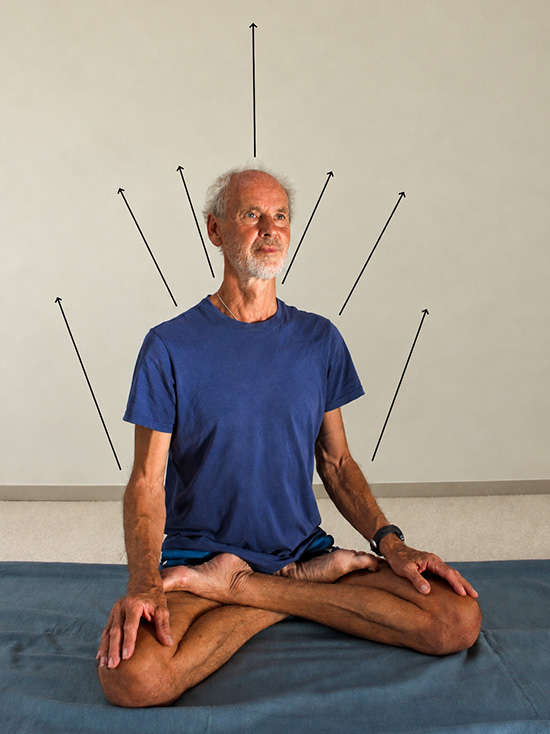
Shankara, the great Indian philosopher, fostered the phrase that Ātman is Brahman.2) For Śaṅkara’s Advaita-Vedānta identifying the nature of Ātman and Brahman are foundational. The significance of this statement forms a foundational element for understanding brahmacarya, or, otherwise expressed, the journey, the life in Brahman, the rising into the Highest. Those who through effort, sacrificial contribution, and persistent pursuit of a true ideal, gradually integrate all of their experiences and soul-feelings into a higher reality. They slowly draw closer to the blissful world of pure thought. The crown of the head, that subtle, elevated sense-centre that totally unconsciously accompanies the human being and is known in yoga as brahmarandhra, casts entirely natural, luminous forces upon the eyes. How is it that people who actively leave behind low desires emanate a beautiful light? This arises from being lifted up or being lifted out over the physical body; it is a form of asceticism that arises through the awareness of a higher ideal. Those that are inspired by a noble ideal totally naturally transcend lower forms of desire because they want to experience the virtues and their beauty from the highest perspective. The higher the aims people have, the more naturally they overcome the lower passions. They do not shy away from any effort in the ascent of the Self toward the realisation of noble ideas and thoughts.
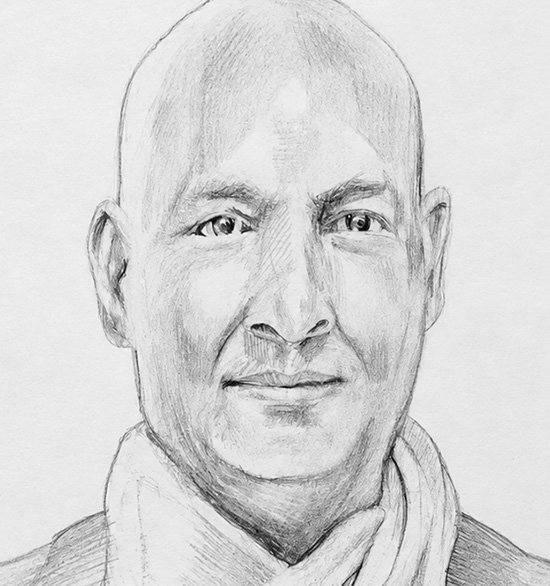
Examples of lives orientated towards a higher ideal.
Although Rudolf Steiner was married twice, he directed his whole life to the development of anthroposophy. His numerous insights into the spiritual worlds and their connections to earthly life form an incomparable act of sacrifice for humanity that could only have come into being in a sensitive journeying to the spiritual worlds. He is a brahmacārin.
Quite a few people who are in male-female relationships journey in the reality of Brahman through their wisdom and excellent morality. An example, that is maybe a little extreme, is the Renaissance artist Raphael who, while given to unrestrained passions for the feminine sex (and perhaps for this very reason this died at a relatively young age from an illness) nevertheless serves as an example of how his soul lived within higher perceptions, and how a great life’s work came to blossom.
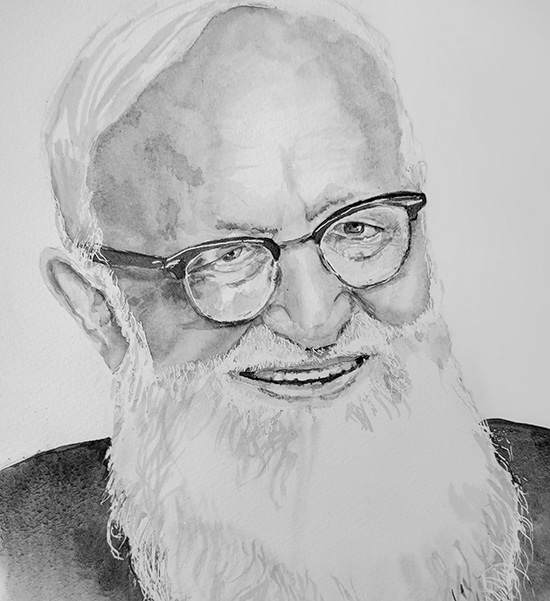
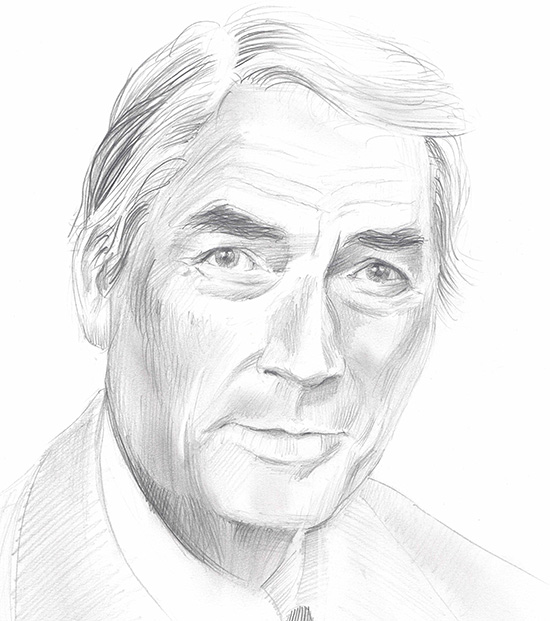
(1885 – 1968)
Pater Kentenich, of the Schoenstatt movement, lived for profound ideals, and through his hunches and soul-feelings towards the spiritual life he was able to emanate subtle, delicate forces of love that were a direct contribution towards peace. He lived in soul-feelings that were truly connected with the plane of the spirit.
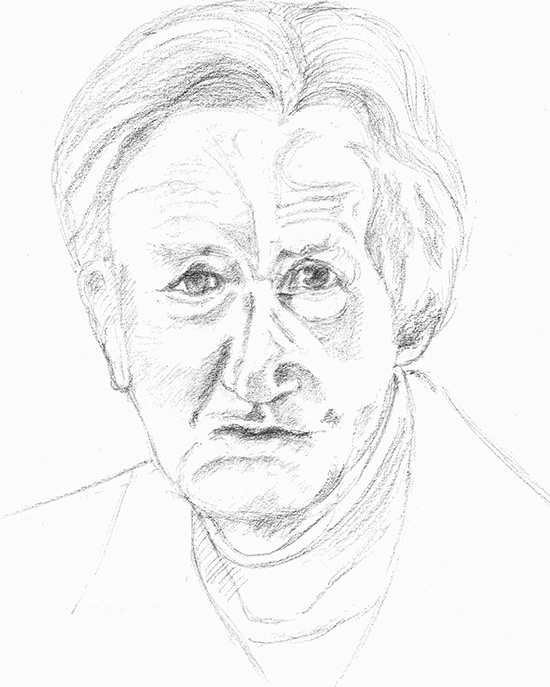
Awareness of truth as the foundation for nonviolence.
For the development of brahmacarya it is essential to attain a profound awareness of truth, a feeling for truth, and ultimately, a founding in the will towards truth. The more this will gains strength within individuals, the more the beautiful and radiant love-forces of the cosmos flow towards them. The astral body begins to shine out of the spirit, the consciousness appears pure and light. This dimension of the cosmos is non-violent. It is soft and strengthening at the same time. People will then naturally value morality more highly than any instinctual desire, retaliation or lingering malice. How relative can the various adventures of sensuality in life, the conflicts, arguments, fits of temper, or misguided emotions become once the flame of spirit begins to burn within people, and their brahmarandhram, the crown of their head, as if raised, directs their whole capacity for uprightness towards the light?
Some people are, to a certain extent, already grounded in brahmacarya with some attributes. Reason, in its most comprehensive sense, is then greater than the covetous lurking desire for worldly things and power. This attitude is beautiful, strong and inherently appealing.
While not all people’s life’s work will flourish as much as that of well-known artists and prominent figures in world history, the impressions left upon the soul-body are nonetheless profound. A brahmacārin can instantly differentiate between truth and lies in their own area of expertise. They cannot be deceived when it comes to spirituality. When the will dares to ascend to the Highest, any truth that contains even a hint of wisdom, is recognised. Human beings take joy in truths, because they have an uplifting effect and, as the Gospel of John states, set people free.3) See John 8:32: “And you shall know the truth, and the truth shall make you free”. The highest ability to differentiate is found in brahmacarya. To what extent can this truth-will foster nonviolence in the world, because it is rooted in a person who is solid, strong, and healthy? Ultimately, health and light actually belong together. The development of strong and dignified moral conditions creates a foundation for society, from which the next step of a better order amongst nations can eventually arise. If a nation is healthy, grounded and stands firmly on moral pillars, it leads to a peaceful equilibrium throughout the whole world.
From the individual human being to societal peace
Brahmacarya is a radiating force, love and universal wisdom that speaks through the human being. Brahman is Ātman or, otherwise expressed, universality becomes the individual will-nature of the human being and therefore Brahman is ultimately Ātman in human beings constantly further realising itself.4)The weaker people become over the course of time in their basic psychological and physical vitality, the more they grow increasingly prone to a passive giving up of the Self, leaving them susceptible to manipulation, suggestion and economic interest. A weakened society can therefore be exploited for the purposes of war. The perspective underlying this discussion focuses on strengthening overall human health through the proper practice of psychological and physical brahmacarya. By strengthening individual conditions with light, a peaceful society can be built from the bottom up.
Within the brahmacārin, the people who know Brahman, there lives a fire that is, in the truest sense, not of this world. It burns, yet remains calm, soft, and with the subtlest forces of love. By becoming a quiet proclamation through human beings, through their souls, it purifies the surroundings and causes violent expressions of the will to fall silent. Health, in both a psychological and physical sense, does not only arise within an individual; it radiates outwards and exerts a healing influence upon the entire environment. Brahmacarya, individual people living and acting within a realised thought, bring about a harmonious balance and a healthy self-confidence for all nations.
World peace is therefore fostered by individuals who give themselves a healthy foundation, from which they are ultimately able to build a social and societal equilibrium to the highest level of morality.

Photo: Sainiventa auf Wikimedia
Anmerkungen
| ⇑1 | Regarding brahmacarya (often spelled brahmacharya), see Patañjali‘s Yoga-Sūtra II,30: ahiṃsā, satya, asteya, brahmacarya und aparigraha, which are known as the five yama. Yoga-Sūtra II,38 links the establishment in brahmacarya with the attainment of vīrya, that is strength or energy. |
|---|---|
| ⇑2 | For Śaṅkara’s Advaita-Vedānta identifying the nature of Ātman and Brahman are foundational. |
| ⇑3 | See John 8:32: “And you shall know the truth, and the truth shall make you free”. |
| ⇑4 | The weaker people become over the course of time in their basic psychological and physical vitality, the more they grow increasingly prone to a passive giving up of the Self, leaving them susceptible to manipulation, suggestion and economic interest. A weakened society can therefore be exploited for the purposes of war. The perspective underlying this discussion focuses on strengthening overall human health through the proper practice of psychological and physical brahmacarya. By strengthening individual conditions with light, a peaceful society can be built from the bottom up. |