Originally posted in German on 27th February 2026
by Heinz Grill
Ritualistic Practices
The question as to why ritualistic practices no longer have a sufficient effect today, or, expressed another way, why they do not lead to a satisfactory spiritual outcome, was raised in my last article on the reversed cult. Certainly, the idea introduced, that both in an Eastern and in a Western context the effectiveness of ritualistic practices is certainly no longer guaranteed, is very generalised. No distinctions are made, nor is it specified whether the discussion concerns Catholic or Protestant consecration rites, the renewed worship within the anthroposophical Christian Community, or practices in the free Christian Churches. Very strong ritual movements exist, for example, in Hinduism and Yoga, such as Puja ceremonies with holy figures that are bathed in milk, or the traditional mantra initiation, which is given from teacher to student. Finally, a wide variety of ritualistic practices can take place in nature, intended, for example, to enliven the so-called elemental beings.
A number of people see my article as a kind of attack on ritualistic practices, because I came to the conclusion that ritualistic practices are no longer sufficiently effective compared to earlier times, and therefore the reversed cult – that is, the striving of the individual to the spirit – should be oriented in an appropriate form. Ritualistic practices can even pose a danger through their claims because they no longer connect people to their own real ability to act but rather lead them, in a relatively passive way, to a kind of higher connection with the spirit, that however they do not achieve through their own strength and conscious insight.
How do the deceased who participated in religious cult practices experience the after-effects of the ritualistic acts they performed?
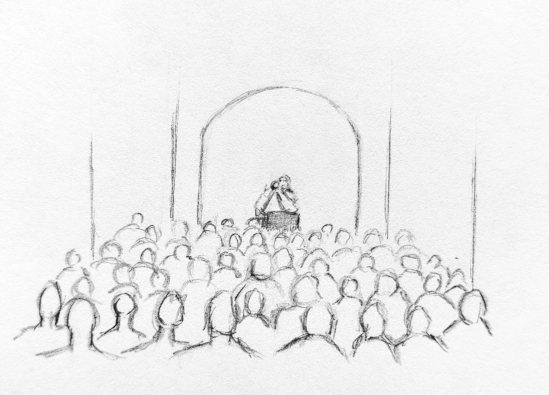
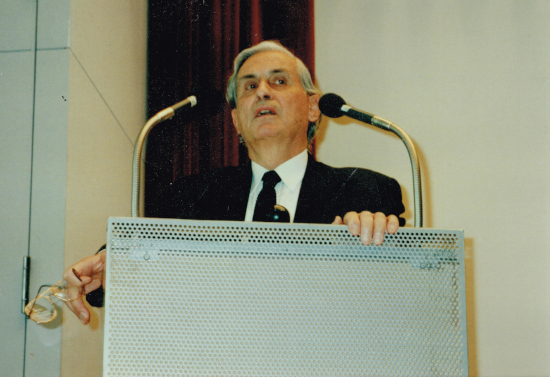
A ritualistic act can be viewed from various perspectives, for example, through the joy and involvement in ritual ceremonies performed by the priest or teacher. People who come together for acts of consecration are generally united through their shared faith and furthermore through gathering in a religious place of their choosing. It is relatively difficult to assess the value of a ritualistic practice based on the choice of words and the devotional atmosphere that pervades the space. One of the last people that I have encountered in a ritualistic practice who could bring an effectiveness directly into the sacrament was the long-deceased Archbishop Julius Kardinal Döpfer. He not only carried out the sacrament for confirmands and others, but also subtly brought in a quiet hint of an understanding of Christ into his ritual, through years of experience and evangelical knowledge. However, this highly intelligent, devout man, short in stature and considered a leading figure amongst the priests, radiated this subtle atmosphere of devotion not only in the act of consecration but in all aspects of his life.
There are certainly also still people in the world today who can carry out a sacrament on the grounds of their purity and their long-standing relationship to spiritual matters, but they are certainly few.
A very difficult contemplation is to assess how a ritual affects the worlds of the dead and how it continues to hold significance for certain people who carried out ritualistic acts by virtue of their office. This contemplation is esoteric and does not rely on earthly sentiments. Rather, it examines the validity and connection of the soul with spiritual truths.
The soul in the afterlife connects profoundly with the higher worlds when it has independently, with real commitment and strength, embarked on the paths to a higher reality. All acts of sacrifice enter into the higher world. Interestingly, according to my research, the various acts of consecration are of very little or no significance for the afterlife.
Although sacraments and ritualistic acts in the various religious ceremonies are meant to provide an initiation, a form of specific consecration, they nevertheless do not have a very great significance for life as a whole.1)For background information on spiritual initiation please also refer to the article, “Initiation – The beginning of spiritual development to the higher self” from 10th October 2023. They do not actually appear at all in the afterlife as an important stage of development. The sacrificial ceremony is still not the sacrifice that the spiritual world takes up with joy.
In general, however, ritualistic acts, if a claim of initiation is not attributed to them, can strengthen community and general devotional memories in people and a perception of a once-existing spirituality within world creation. As a result of a lack of connection between deed and word, the priest’s withdrawal and the ceremony that nevertheless takes place (which would in fact have required a conscious, content-lead approaching of the spirit), the acts remain like a reality that leaves the soul in the afterlife indifferent and untouched.
How do great teachers experience the effect in the afterlife of the sacrament they carried out?
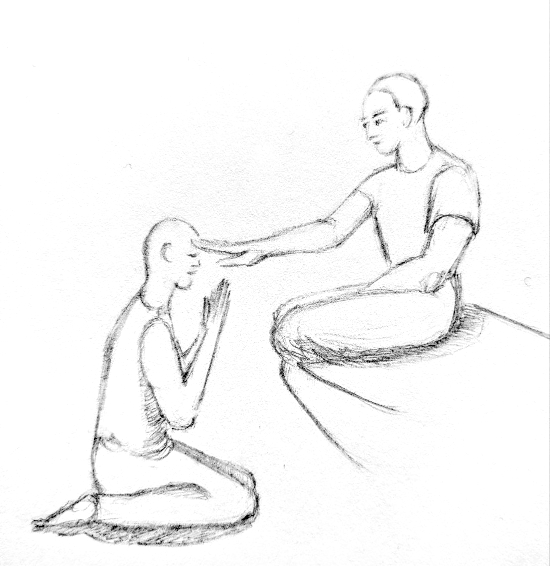
The mantra initiation which often takes place in yoga schools from teacher to student, forms in most cases merely an outer ritual. When Vishnu Devananda initiated students into mantra, he already knew during his lifetime that this repeated recitation and the conscious energetic transmission ceremony of the mantra were only valuable to the extent that he, as the initiated teacher, had prepared himself in terms of his capacity for knowledge and perception of the mantra.2) Vishnu Devananda himself described this in presentations and lectures in 1984. The initiation that he carried out does not appear to have so much value in the reality of the afterlife, whereas his life of sacrificial service to the world and the various conscious developmental steps towards yoga had reached a relatively high stage. His soul supports today less the ritual itself and more the healthy, consciousness-building, and above all, disciplined creative forces of the human being, and this quite particularly through forming thoughts. Today he is rejected as a result of scandals involving women, but this degradation does not carry any weight for his soul, really none.3) Please also refer to the article regarding Vishnu Devananda “How karma is taken on from your fellow human beings” from May 4, 2023, (not yet translated into English). His creative potential wants to encourage people to a more active, higher consciousness, and this especially without ritual.
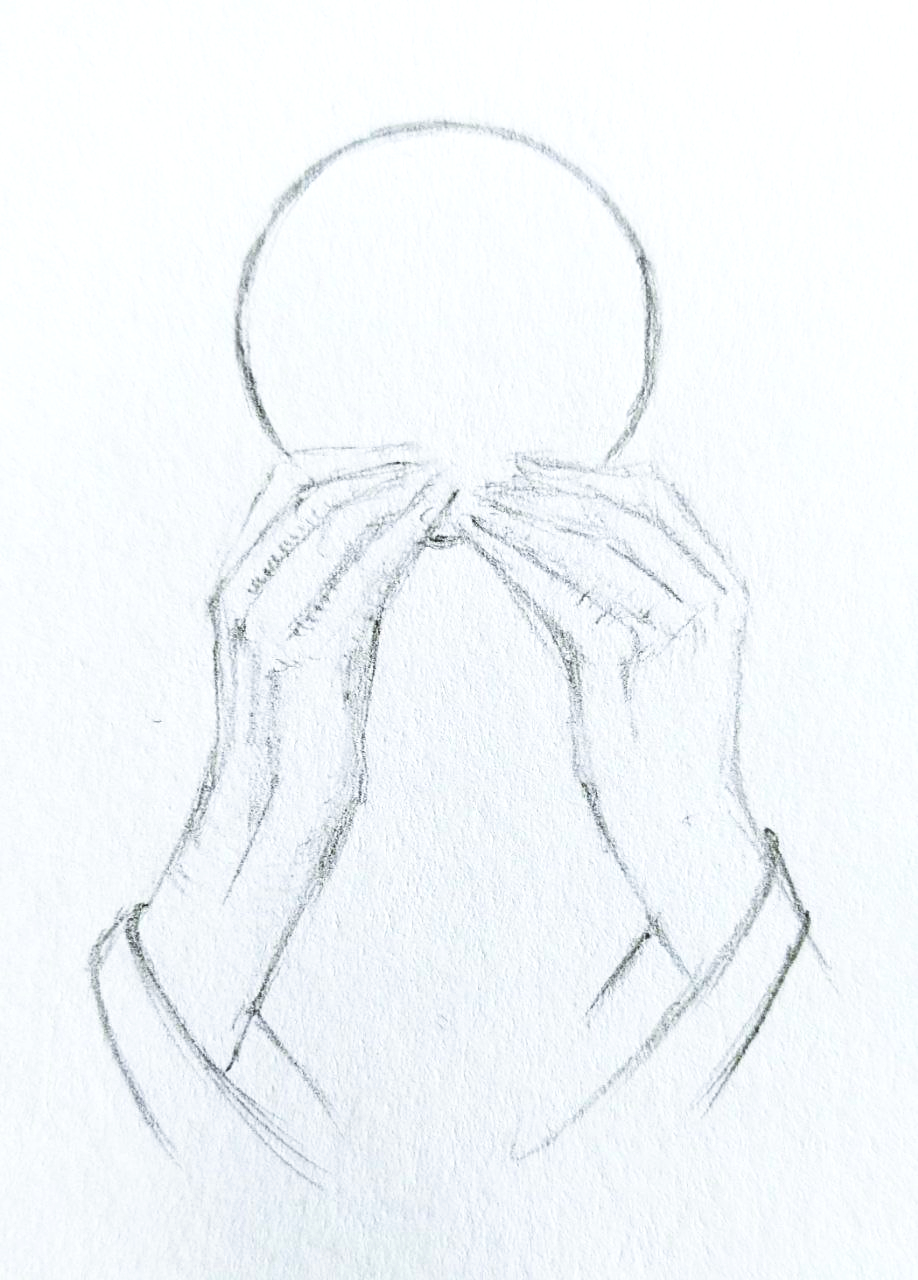
The Benedictine monk Bede Griffiths did not lay a claim on the Eucharist, and directly as a result of its lack of claim the sacrament took on a finer and lighter mood, that led the individual seeker closer to a soul feeling of the spirit.4) Bede Griffiths emphasised individual engagement and contemplative consolidation with respect to the external forms of ritual. In his autobiography, The Golden String, he writes, “The liturgy must be something lived inwardly; otherwise it becomes a mere external performance.“ And in his book published in 1982, The Marriage of East and West he writes, “The sacraments are outward signs of an inward spiritual reality; unless that inner reality is realised, the rite remains incomplete.” After his death, however, the value of this Eucharist was no more than any other work performed in his Indian ashram, whether in the kitchen or through yoga exercises. For him, the sacrament appeared as a kind of action that each perceiving and reverent soul must bring about within themselves. Every person, if they have truly realised their spirit, would be an animated creative spirit, achieving “hoc est enim corpus meum” (that is, ‘This is my body’, that colloquially has been devalued to “hocus pocus”).
Abbot Emanuel Jungclaussen, the Benedictine monk from Niederalteich who promoted ecumenism between the Eastern and Western Churches, was a great expert on the rites. He frequently spoke about the dark forces that unfortunately take hold of these rites and prevent the priest’s ministry from remaining within the purity of the sacrament. In the afterlife, his soul experiences a profoundly strong yearning for consciousness-forming activity, which the individual should undertake in good attunement with teachers and wise literature.5) With this statement, which was also intensively discussed in personal conversations, the abbot consciously placed himself in the field of tension towards the Catholic sacramental theology, which has the mandatory doctrine that the sacrament is effective ex opere operato, i.e. independently of the moral integrity of the priest.
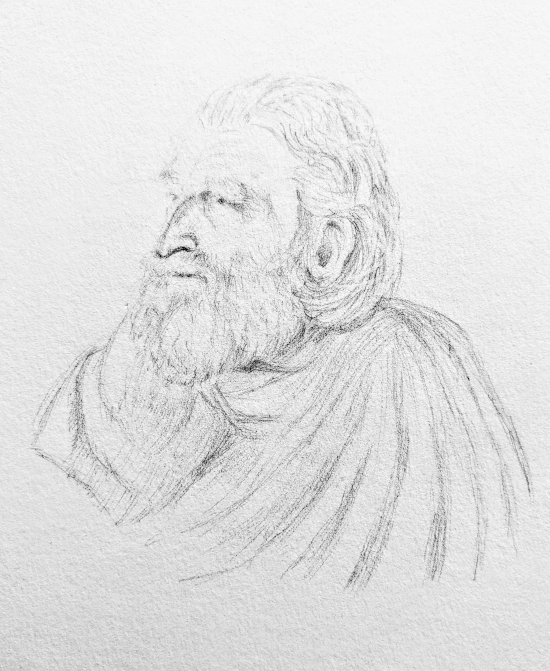
All drawings by Yva Ev
Johannes Lenz, the experienced and very likeable leader of the anthroposophical Christian Community – who died several years ago – experiences remarkable Jupiter-like qualities in the afterlife and recognises the relativity of the sacraments. From the afterlife, he significantly supports relationships between people. Although he had a strong connection to the anthroposophical Christian Community and to prayer and sacraments, the afterlife led him by no means any longer into this rather passive world of faith, but rather he lifted himself into the conscious sphere of personal word, that stands above ritual.
Various studies, experiences, and observations show that ritual naturally has the effect of building community, as it were celebrating a memory, when it takes place without claiming an ownership of the truth.
Human beings enter the spiritual world with the abilities they have been able to cultivate and nurture within themselves. Rituals, ceremonies and creeds to which they belonged during their earthly time hold no notable significance for them.
My book “Die Wirksamkeit des Heiligen Geistes in Sakrament und Wort” (The Efficacy of the Holy Spirit in Sacrament and Word – not translated into English”) published about 30 years ago and now out of print, would require further revision today due to its linguistic style. However, the reasoning presented with the content of the text can still be very clearly verified even today. A new edition of this book, originally comprising 70 pages, will need some time and if I am able to create this space, I will read the text and bring it into a new edition.
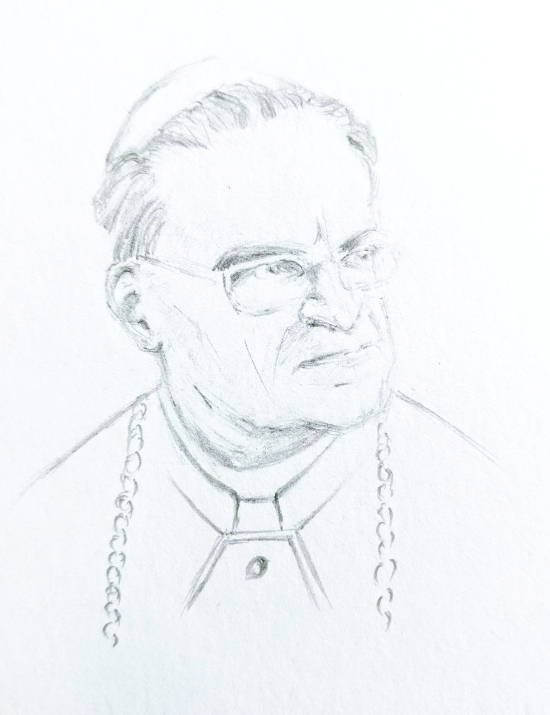
In his lifetime he was known among priests to have a great capacity.
Anmerkungen
| ⇑1 | For background information on spiritual initiation please also refer to the article, “Initiation – The beginning of spiritual development to the higher self” from 10th October 2023. |
|---|---|
| ⇑2 | Vishnu Devananda himself described this in presentations and lectures in 1984. |
| ⇑3 | Please also refer to the article regarding Vishnu Devananda “How karma is taken on from your fellow human beings” from May 4, 2023, (not yet translated into English). |
| ⇑4 | Bede Griffiths emphasised individual engagement and contemplative consolidation with respect to the external forms of ritual. In his autobiography, The Golden String, he writes, “The liturgy must be something lived inwardly; otherwise it becomes a mere external performance.“ And in his book published in 1982, The Marriage of East and West he writes, “The sacraments are outward signs of an inward spiritual reality; unless that inner reality is realised, the rite remains incomplete.” |
| ⇑5 | With this statement, which was also intensively discussed in personal conversations, the abbot consciously placed himself in the field of tension towards the Catholic sacramental theology, which has the mandatory doctrine that the sacrament is effective ex opere operato, i.e. independently of the moral integrity of the priest. |